Is Microsoft Turning Windows Into a Linux-Friendly OS? Here's What Build 2026 Reveals
Microsoft is bringing Linux commands, containers, and AI-powered developer tools to Windows. Here's what Build 2026 reveals about the future of Windows development.
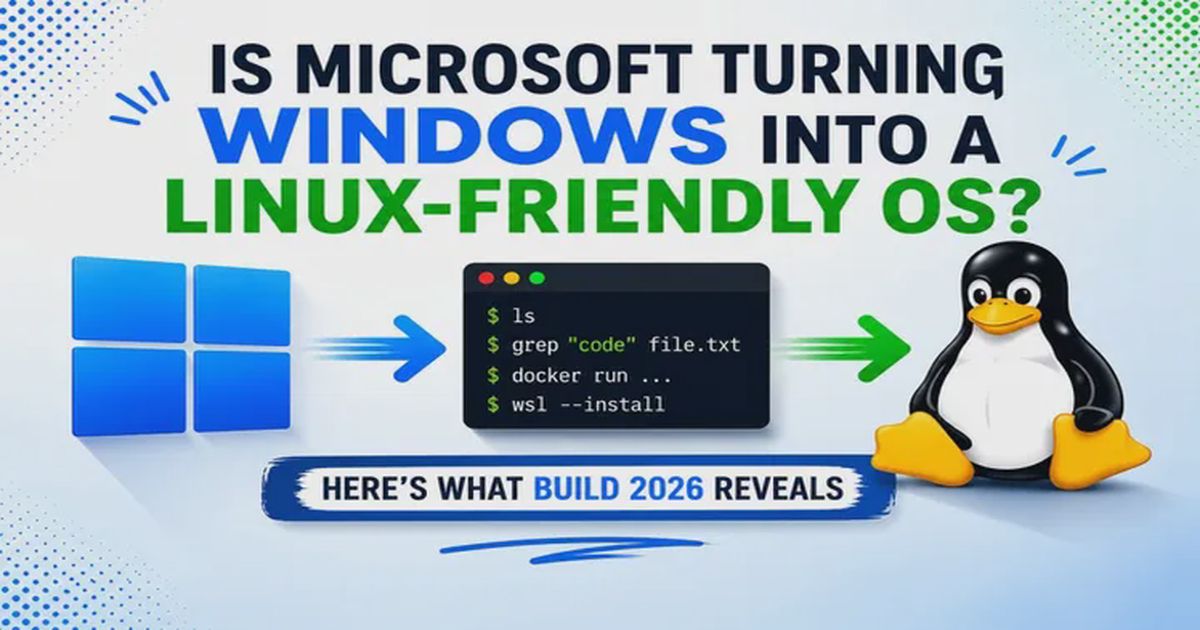
For decades, Windows and Linux have been viewed as two very different worlds.
Windows dominated personal computers and enterprise desktops, while Linux became the foundation of servers, cloud infrastructure, containers, and modern software development. Developers often had to switch between the two environments or rely on compatibility layers to make their workflows work smoothly.
But something interesting has been happening over the past few years.
Microsoft introduced the Windows Subsystem for Linux (WSL), embraced open-source software, acquired GitHub, invested heavily in Linux-based cloud infrastructure, and continued improving cross-platform development tools. Now, at Build 2026, Microsoft has taken another significant step by bringing Linux-style Coreutils commands directly to Windows.
At first glance, this may seem like a small quality-of-life improvement. However, when viewed alongside Microsoft’s other developer-focused announcements, it raises an important question:
Is Microsoft gradually transforming Windows into a more Linux-friendly operating system?
The short answer is no. Windows is not becoming Linux. However, Build 2026 clearly shows that Microsoft wants Windows to feel increasingly comfortable for developers who rely on Linux tools and workflows.
Let’s take a closer look at what was announced and what it means for the future of Windows development.
What Happened at Build 2026?
Build 2026 focused heavily on developers.
While artificial intelligence received much of the spotlight, several announcements targeted one of Microsoft’s long-term goals: making Windows a better platform for software development.
Among the most notable announcements were:
- Native Linux-style Coreutils commands for Windows
- Improvements to container-based development workflows
- AI-powered developer tools and terminal experiences
- Faster developer environment setup through configuration tools
- Expanded support for modern cloud-native development
Individually, these updates may seem unrelated. Together, they reveal a broader strategy aimed at reducing friction between Windows and Linux development environments.
Microsoft’s Coreutils Project Explained
One of the most talked-about announcements from Build 2026 was Microsoft’s Coreutils project.
Coreutils refers to a collection of essential command-line utilities commonly used in Linux and Unix systems. These commands are part of everyday workflows for millions of developers around the world.
Popular examples include:
ls
cp
cat
grep
find
mv
rm
pwd
Traditionally, Windows users had several options if they wanted to use these commands:
- Install WSL
- Use Git Bash
- Use Cygwin
- Use third-party compatibility tools
Microsoft’s new approach changes that.
Instead of requiring a separate Linux environment, these utilities can run directly within Windows as native executables. This allows developers to use familiar Linux commands without launching a Linux subsystem or relying on external tools.
For developers who regularly move between Linux servers and Windows workstations, this could significantly simplify daily workflows.
Why Is Microsoft Doing This?
At first glance, adding Linux commands to Windows might seem surprising.
However, the decision makes perfect sense when viewed through the lens of modern software development.
The Cloud Runs on Linux
Today’s cloud infrastructure is heavily dominated by Linux.
Many workloads running on cloud platforms rely on Linux servers, containers, and open-source software.
Whether developers are deploying applications to virtual machines, Kubernetes clusters, or container platforms, Linux often plays a central role.
As a result, many developers spend their days working with Linux-based tools even if their primary desktop operating system is Windows.
Cross-Platform Development Is the New Normal
Modern software teams rarely work on a single operating system.
A typical workflow may involve:
- Writing code on Windows
- Testing inside Linux containers
- Deploying to Linux servers
- Managing cloud infrastructure through command-line tools
This creates friction when commands behave differently across platforms.
By bringing Linux-style tools directly into Windows, Microsoft helps reduce that friction.
Developers Expect Linux Tools
Over the past decade, developer expectations have changed dramatically.
Many popular technologies—including Docker, Kubernetes, Node.js, Python, Go, Rust, and countless open-source frameworks—were designed with Linux environments in mind.
Instead of asking developers to adapt to Windows, Microsoft appears to be adapting Windows to developer workflows.
Beyond Coreutils: Other Build 2026 Developer Announcements
The Coreutils project is only one piece of a much larger puzzle.
Several other Build 2026 announcements point toward the same overall strategy.
WSL Containers
Containers have become a cornerstone of modern application development.
Microsoft continues expanding Windows support for Linux container workflows through WSL integration.
This allows developers to build, test, and run Linux-based containers without leaving their Windows environment.
For developers working with Docker and Kubernetes, this creates a much smoother experience.
Intelligent Terminal
Microsoft is also exploring AI-assisted development directly within terminal environments.
The concept of an intelligent terminal combines traditional command-line workflows with AI-powered assistance.
Rather than switching between documentation, browsers, and terminal windows, developers may increasingly receive contextual help within the tools they already use.
Developer Configuration Tools
Setting up a new development machine can often take hours.
Microsoft’s developer configuration initiatives aim to simplify that process by allowing developers to quickly reproduce development environments.
This helps reduce onboarding time and improves consistency across teams.
AI Development on Windows
Build 2026 also highlighted Microsoft’s growing investment in local AI development.
With support for local models, AI tooling, and machine learning workflows, Windows is positioning itself as a platform not only for traditional software development but also for AI-powered applications.
Is Windows Becoming Linux?
This is the question many developers are asking.
The answer is both simple and nuanced.
No, Windows Is Not Becoming Linux
Windows still uses:
- The Windows kernel
- The Windows driver model
- Win32 applications
- The Windows ecosystem
Microsoft has not announced any plans to replace Windows with Linux.
The fundamental architecture of Windows remains unchanged.
But Windows Is Becoming More Linux-Friendly
What is changing is the developer experience.
Microsoft is steadily removing barriers that previously separated Windows and Linux workflows.
Instead of forcing developers to choose between Windows and Linux, Microsoft increasingly wants developers to use both together.
The goal is not to turn Windows into Linux.
The goal is to make Linux-oriented development feel natural on Windows.
What This Means for Developers
The impact of these changes will vary depending on your role.
For Web Developers
If you work with technologies such as:
- PHP
- Node.js
- React
- Next.js
- Astro
- Laravel
you will likely benefit from a more consistent command-line experience across development and production environments.
Many hosting platforms and cloud servers already run Linux, so matching workflows can improve productivity.
For DevOps Engineers
DevOps professionals often rely heavily on Linux tooling.
Native access to familiar commands and better container support can simplify:
- Infrastructure management
- Container orchestration
- Deployment automation
- Server administration
For Open Source Contributors
Open-source projects frequently assume Linux-based development environments.
A more Linux-friendly Windows experience makes it easier for contributors to participate without changing operating systems.
The Bigger Picture Behind Microsoft’s Strategy
To fully understand Build 2026, it helps to look at the broader timeline.
A Decade of Change
Not long ago, Microsoft and Linux were often seen as competitors.
Today, the relationship looks very different.
Key milestones include:
- Open-source adoption across Microsoft products
- The acquisition of GitHub
- The launch of Windows Subsystem for Linux (WSL)
- Growing Linux usage on Azure
- Improved container support
- The introduction of Coreutils for Windows
Viewed together, these developments reveal a consistent trend.
Microsoft is no longer trying to pull developers away from Linux.
Instead, it is embracing the reality that Linux plays a major role in modern software development.
What Could Happen Next?
While Build 2026 introduced several important improvements, it may only represent the beginning of a larger transformation.
In the coming years, we could see:
- Deeper Linux tool integration
- More AI-powered development experiences
- Improved container workflows
- Faster developer environment provisioning
- Better cross-platform compatibility
Microsoft appears committed to making Windows a first-class platform for modern software development.
The company understands that developers increasingly work across multiple operating systems, cloud platforms, and deployment environments.
Final Thoughts
Microsoft is not replacing Windows with Linux.
However, Build 2026 makes one thing clear: the company is working aggressively to make Windows more attractive to developers who rely on Linux-based tools and workflows.
The introduction of Coreutils, continued investment in WSL, expanded container support, AI-powered developer experiences, and improved configuration tools all point toward the same goal.
Rather than forcing developers to adapt to Windows, Microsoft is adapting Windows to the way developers already work.
Whether you’re a web developer, DevOps engineer, open-source contributor, or cloud architect, the future of Windows development may look far more Linux-friendly than many people expected just a few years ago.
However, whether these changes are enough to convince developers to choose Windows over Linux remains an open question.
And if Build 2026 is any indication, Microsoft’s effort to bridge the gap between the two ecosystems is only getting started.
Frequently Asked Questions (FAQ)
What is Microsoft’s Coreutils project?
Microsoft’s Coreutils project brings popular Linux command-line utilities such as ls, cp, cat, grep, and find directly to Windows as native executables.
Do I still need WSL to use Linux commands on Windows?
For many basic command-line operations, the new Coreutils tools may reduce the need for WSL. However, WSL is still required when you need a complete Linux environment.
Is Microsoft replacing Windows with Linux?
No. Windows continues to use its own kernel, driver model, and operating system architecture. Microsoft is simply making Windows more developer-friendly.
Why is Microsoft adding Linux tools to Windows?
Modern software development heavily relies on Linux servers, containers, and cloud infrastructure. Adding Linux tools helps developers maintain consistent workflows across platforms.
What are the biggest developer announcements from Build 2026?
Some of the most important announcements include:
- Coreutils for Windows
- WSL container improvements
- AI-powered terminal experiences
- Developer configuration tools
- Enhanced AI development support
Will these changes benefit web developers?
Yes. Developers working with PHP, Node.js, React, Laravel, Next.js, Astro, Docker, and cloud platforms may experience more consistent development workflows between Windows and Linux environments.
Subhodip Ghosh
Engineering, systems programming, and curated technology insights.