List of bots
"bot” covers a wide range of automated software
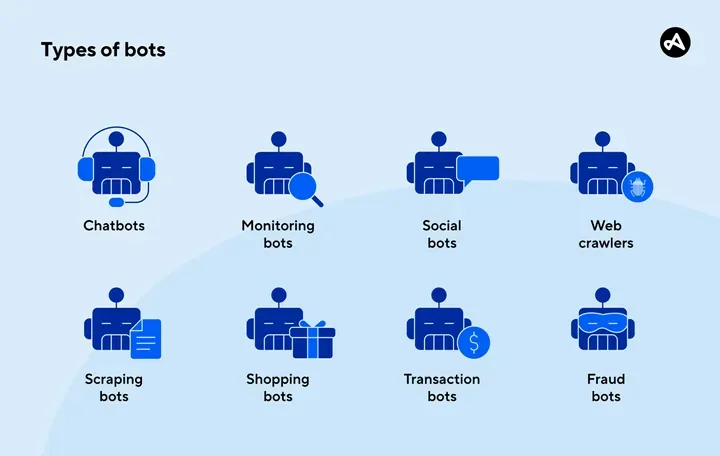
Your query for a “List of Bots” is ambiguous, but based on context from your past questions about Googlebot, it likely refers to popular web crawlers and bots. These automated programs scan websites to index content for search engines or other purposes
The term “bot” covers a wide range of automated software, from helpful tools that index the web for search engines to malicious programs designed to steal data or disrupt services. Here is a categorized list of the most common types of bots you’ll encounter today.
Categories and Lists of Bots
Bots can be broadly divided into two main categories: legitimate (or “good”) bots that perform useful functions, and malicious (“bad”) bots designed for harmful activities
Legitimate Bots
These bots automate tasks to improve efficiency, provide services, or gather information in a way that is generally beneficial or neutral to website owners and users.
| Bot Category | Description | Examples |
|---|---|---|
| Search Engine Crawlers | Index web content for search engines; essential for SEO | Googlebot, Bingbot, Baiduspider, Yandex Bot, DuckDuckBot |
| SEO & Analytics Crawlers | Gather data for SEO audits, backlink checks, and competitive research | AhrefsBot, SemrushBot, Majestic MJ12 |
| Social Media & Preview Bots | Scan shared links to create rich previews on social platforms | Facebook Crawler, Twitterbot, LinkedInBot, Slackbot |
| Chatbots | Simulate conversation for customer service, support, and information | Customer service bots, website chatbots, WhatsApp auto-responders |
| Personal & Productivity Bots | Automate tasks like scheduling, translation, and news aggregation | Scheduling assistants, translators, news summarizers |
| Monitoring Bots | Track system performance, uptime, and application health | Website health monitors, uptime trackers, vulnerability scanners |
| AI-Powered Bots | Use AI for content generation and real-time information retrieval | GPTBot (OpenAI), ClaudeBot (Anthropic), PerplexityBot |
Malicious Bots
These bots are programmed with harmful intent, such as stealing data, committing fraud, or disrupting services.
| Bot Category | Description | Examples |
|---|---|---|
| Scrapers | Extract website content without permission | Competitors scraping product prices, data theft, duplicating site content for phishing |
| Spam Bots | Flood sites and platforms with unsolicited or malicious content and links | Comment section spam, forum spam, social media direct message spam |
| Account Takeover Bots | Use stolen credentials to gain unauthorized access to user accounts | Bots attempting logins with leaked username/password combinations (credential stuffing) |
| Click Fraud Bots | Simulate ad clicks to inflate revenue or drain competitors’ ad budgets | Bots clicking on pay-per-click ads |
| DDoS Bots | Overwhelm a target with traffic, making it inaccessible | Botnets used in distributed denial-of-service (DDoS) attacks |
| Scalpers / Grinch Bots | Automate purchase of limited goods to resell at higher prices | Bots buying event tickets, sneakers, or holiday items instantly |
| Fake Social Media Bots | Mimic human behavior to spread misinformation and manipulate engagement | Bots auto-liking, retweeting, commenting, inflating followers |
How to Identify and Manage Bots
Identifying and managing the bot traffic on your website is crucial for security and performance.
Identification: Most legitimate bots identify themselves with a specific user agent string that you can find in your server logs . However, because malicious bots can fake these strings, more advanced bot detection tools use additional signals like IP reputation, behavior analysis, and TLS fingerprinting to distinguish good bots from bad
Management: You can control bot access to your site using a robots.txt file, which instructs well-behaved crawlers which parts of your site they can and cannot visit . For more robust control, bot management solutions can classify traffic and take actions like rate-limiting, blocking, or challenging suspicious requests
tarun basu
Engineering, systems programming, and curated technology insights.