Raspberry Pi is not Alone Anymore
The SBC world has expanded beyond Raspberry Pi, offering specialized boards for AI, networking, and performance—making it easier to choose the right tool for every project.
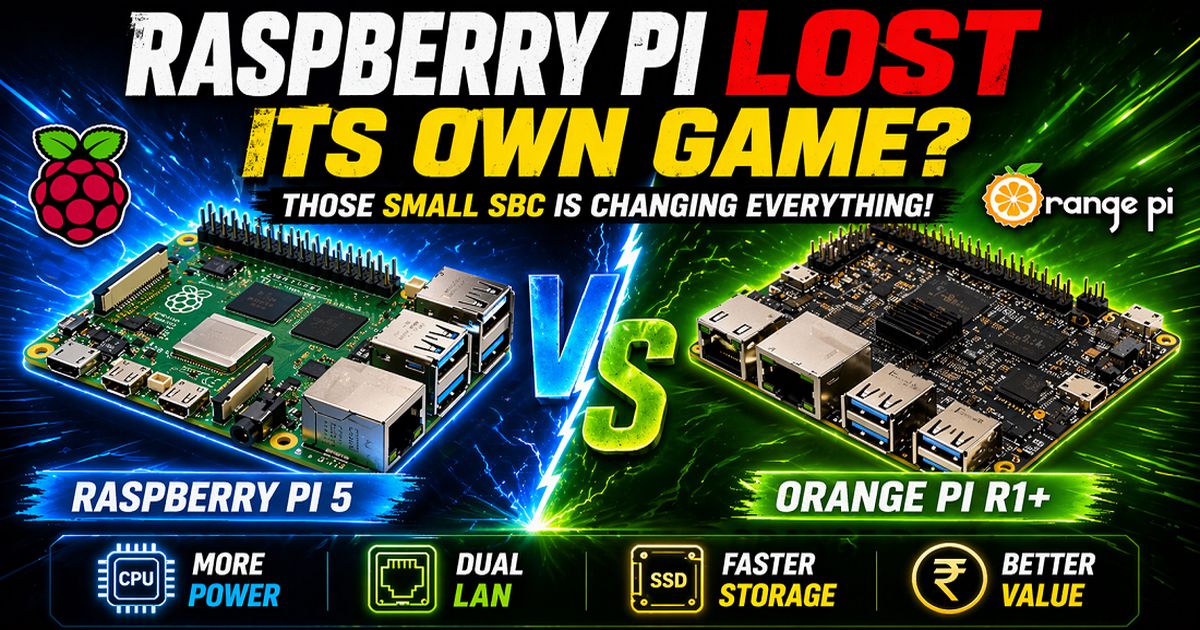
For a long time, the Raspberry Pi dominated the world of single-board computers (SBCs). It became the default choice for beginners, hobbyists, and even professionals working on embedded systems, IoT projects, and small-scale computing solutions.
But today, the SBC landscape is much bigger than just one device.
From AI-focused boards like the NVIDIA Jetson AGX Orin to networking-oriented devices like the Orange Pi R1 Plus, and performance-driven boards such as the Radxa Rock 4X — the ecosystem has evolved into a diverse and specialized space.
Each board now targets a different use case:
- Some are built for AI and machine learning
- Some are optimized for networking and routing
- Others focus on raw performance or storage speed
So instead of looking at SBCs through the lens of a single brand, it’s time to explore the broader picture.
This is no longer just about Raspberry Pi — it’s about choosing the right SBC for the right job.
So instead of asking “Is Raspberry Pi still good?”, the better question is:
Is Raspberry Pi still the best choice for every use case?
The Evolution of Raspberry Pi
When Raspberry Pi first launched, it wasn’t trying to compete with high-performance machines. Its goal was simple:
-
Make computing affordable
-
Help people learn programming
-
Provide easy hardware access through GPIO
Early versions had:
-
Limited RAM (256MB / 512MB)
-
Basic CPU performance
-
Simple GPU
-
microSD storage only
Fast forward to today — Raspberry Pi has come a long way:
-
Multi-core CPUs
-
Up to 16GB RAM
-
USB 3.0, Gigabit Ethernet
-
Dual display support
-
Improved GPU performance
It’s no longer just a learning board — it’s a capable mini computer.
But while Raspberry Pi was improving, competitors were evolving faster and in different directions.
The SBC Market Is No Longer Just Raspberry Pi
One of the biggest changes today is variety.
You’re no longer limited to one ecosystem. Instead, you have a range of SBCs optimized for specific needs:
-
AI and machine learning
-
Networking and routing
-
High-performance computing
-
Compact embedded systems
This shift means:
There is no single “best SBC” anymore — only the best SBC for your use case.
AI Powerhouse: NVIDIA Jetson Series
If your focus is AI or machine learning, Raspberry Pi simply cannot compete with devices like the
👉 NVIDIA Jetson AGX Orin
🔥 Why Jetson Stands Out
-
Up to 248 TOPS AI performance (achieving similar AI performance in a laptop can cost around ₹2,50,000 – ₹5,00,000+)
-
Built specifically for AI workloads
-
GPU acceleration for deep learning
-
Used in robotics, automation, and edge AI
Reality Check
-
Expensive compared to Raspberry Pi
-
Higher power consumption
-
Not beginner-friendly
👉 Verdict:
Perfect for AI developers, but overkill for basic projects.
Networking Use Case: Orange Pi R1+
Not all SBCs are about raw power. Some are built for specific purposes.
Take the
👉 Orange Pi R1 Plus
What Makes It Special?
-
Dual Ethernet ports
-
Compact size
-
Low power consumption
Best Use Case
-
DIY router
-
Firewall system
-
Network monitoring device
👉 You can literally turn this into a custom router using OpenWRT.
This is something Raspberry Pi can do — but not as efficiently without extra hardware.
Performance Challenger: Radxa Rock 4X
Another strong competitor is
👉 Radxa Rock 4X
Key Advantages
-
Better CPU performance than older Pi models
-
eMMC support (faster than microSD)
-
NVMe support in some variants
-
Good balance between price and performance
Where It Fits
-
Desktop-like usage
-
Development environments
-
Performance-heavy projects
👉 This is where Raspberry Pi starts to feel limited, especially in storage speed and raw processing.
Quick Comparison
📊 Quick Comparison (Expanded SBC Landscape)
| Category | Raspberry Pi | Jetson (AI) | Orange Pi R1+ | Rock 4X | BeagleBone Black |
|---|---|---|---|---|---|
| AI Performance | Low | 🔥 Very High | Low | Medium | Low |
| Networking | Add-ons | Basic | ✅ Dual LAN | Basic | Industrial I/O |
| Storage Speed | microSD | eMMC / NVMe | microSD | eMMC/NVMe | eMMC |
| CPU Power | Medium | High | Low | High | Low–Medium |
| GPIO / I/O | Excellent | Moderate | Basic | Good | 🔥 Industrial-grade |
| Ease of Use | ⭐⭐⭐⭐⭐ | ⭐⭐⭐ | ⭐⭐⭐⭐ | ⭐⭐⭐ | ⭐⭐⭐ |
| Community | Massive | Growing | Medium | Growing | Strong (niche) |
| Best Use Case | Learning / DIY | AI / Robotics | Router / Firewall | Desktop / Dev | Embedded / Industrial |
What Raspberry Pi Still Does Better
Even with all this competition, Raspberry Pi still holds strong advantages:
-
Huge community support
-
Extensive documentation
-
Stable operating system
-
Beginner-friendly ecosystem
-
Wide accessory support (HATs, modules)
👉 For learning, teaching, and quick prototyping — Raspberry Pi is still unmatched.
Where Raspberry Pi Falls Behind
Let’s be honest — there are areas where Raspberry Pi struggles today:
-
Limited AI capabilities
-
Slower storage (microSD bottleneck)
-
Pricing issues due to demand
-
Less specialization compared to newer SBCs
So, Has Raspberry Pi Lost Its Game?
Not really.
But it has lost something important:
Its position as the only obvious choice.
Today:
-
Need AI? → Jetson
-
Need a router? → Orange Pi R1+
-
Need performance? → Radxa Rock 4X
-
Need simplicity? → Raspberry Pi
👉 The ecosystem has matured.
Final Thoughts
Raspberry Pi didn’t lose — it just stopped being alone Variety at the top.
And honestly, that’s a good thing.
More competition means:
-
Better innovation
-
More choices
-
More specialized hardware
For developers, makers, and engineers — this is the best time to explore SBCs.
Want to deploy apps, clusters, or Customize hosting services?
👉 Explore our services at siliconpin.com and start building your own edge infrastructure today.
Subhodip Ghosh
Engineering, systems programming, and curated technology insights.